Universal Audio Apollo Solo Review - The Best Audio Interface for Home Studios?
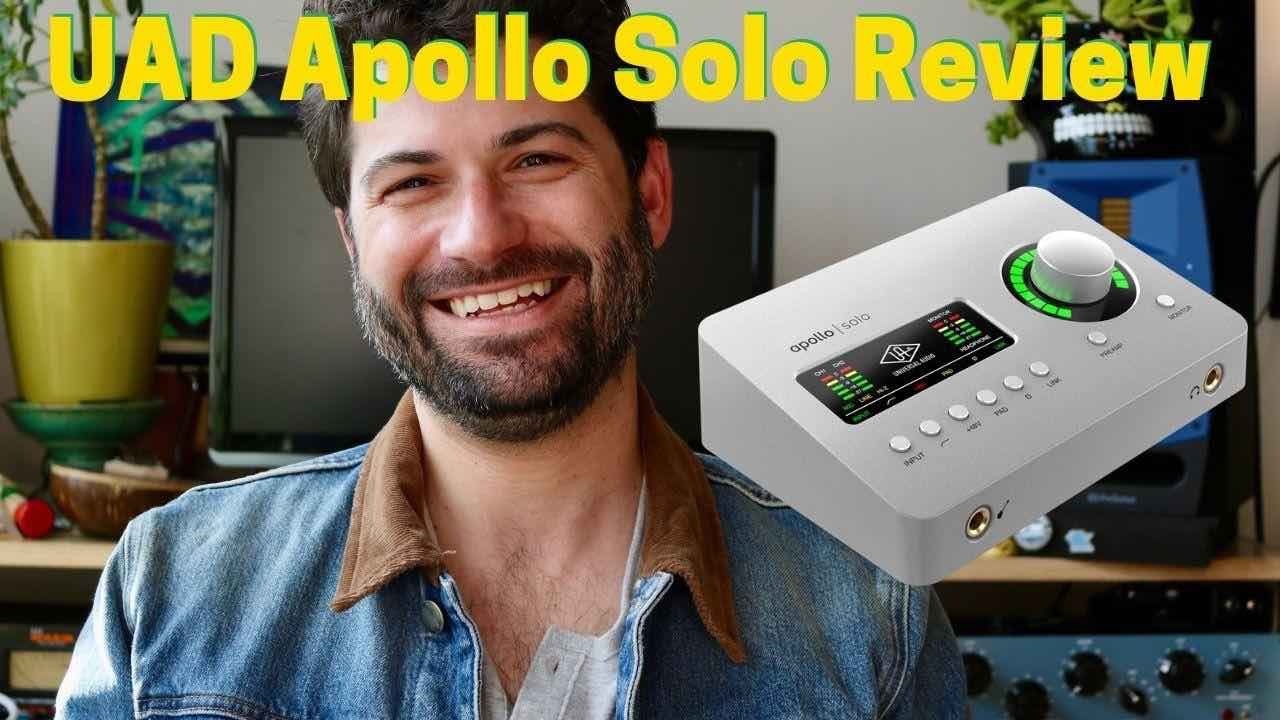
Universal Audio recently released a long-awaited new audio interface — the Apollo Solo. This review covers everything from features to sound demos of the plugins. My conclusion: I’ve been using mine for several years and have fallen in love with it, but it has some glaring weaknesses that might not work for everyone.
Note: some of the links below may be affiliate links, meaning that I receive a commission if you purchase through them.
UAD Apollo Solo Features
The UAD Apollo Solo Thunderbolt 3 audio interface is about quality over quantity. Metal construction, a simple front panel dominated by one knob, and a compact rugged chassis you could travel with. On the front: a digital meter, Hi-Z guitar input, and headphone jack. On the back: two universal XLR/1/4" inputs, stereo monitor outs, and a Thunderbolt 3 port. Note: a Thunderbolt 3 cable is not included. If you don't have Thunderbolt, get the Apollo Solo USB Heritage Edition instead.
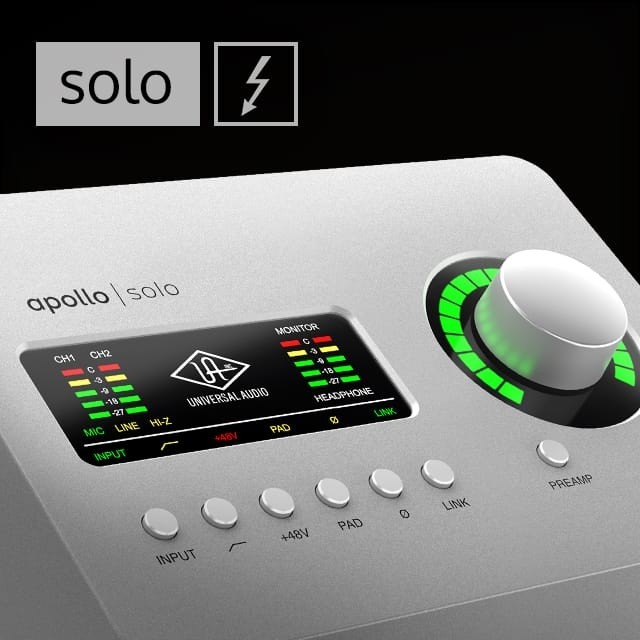
What Makes The Apollo Solo So Great?
The Apollo is loaded with top-of-the-line A/D and D/A signal converters that make your music noticeably cleaner and clearer. On top of that, the Apollo includes UAD’s proprietary Unison Mic Preamps technology that accurately models classic analog hardware. This combination of processing quality in a small form factor is what makes this the best audio interface for small home studios.
If you want to save some money, you can find good deals on used interfaces here.
Apollo Solo's Shortcomings
Only one set of outputs means re-amping requires re-wiring. I genuinely miss having an extra headphone jack — a cheap headphone splitter is a workaround. Only two inputs can actively record at any time.
On the upside, you can daisy chain multiple UAD interfaces via Thunderbolt. I've added a Universal Audio Satellite to increase processing power, and it runs very smoothly. UAD also offers "Spark" versions of popular plugins that run natively on your computer for mixing (not live recording).
UAD Apollo Solo Review Video
UAD Apollo Included Plugins
The Apollo Solo comes bundled with the Heritage Bundle — a full library of UAD plug-ins including:
- UA 610‐B preamp
- Marshall Plexi Classic Amplifier
- Teletronix LA‐2A Legacy
- UA 1176LN & 1176SE Legacy
- Pultec EQP‐1A & Pultec Pro Legacy
- Ampeg® SVT-VR Classic Bass Amp
- Precision Channel Strip, Reflection Engine, Delay Modulation
- Raw Distortion & RealVerb‐Pro

All of these plugins sound incredible. The bass and guitar amp plugins are a bit limited in tweak-ability, but overall the included bundle is way more impressive than what other companies bundle with their interfaces.
If you register your interface, you’ll also get a free bonus chorus/vibrato pedal — one of my favorite chorus plugins. All UAD plugins can be demoed free for 14 days. Note: all demo plugins install automatically and will clutter your DAW's plugin list until you manually disable the ones you don't own.
Apollo Solo's Included Software
Universal Audio’s Console software handles everything from headphone mixes to plugin routing — beautifully straightforward. The Apollo Solo also includes Luna (Mac only), a free DAW that integrates seamlessly with UAD plugins. It's really nice as a free DAW, but not enough to pull me away from Reason and Logic.

UAD Apollo Sound Quality
Simply put — amazing. The inputs are clean, clear, and full of dynamic range. I genuinely gasped when I listened to some of my favorite albums through the Apollo Solo for the first time. The headphone amp is powerful enough to drive the most professional mixing headphones. Everything on my Sennheiser 650s sounds immaculate.
UAD Apollo Latency & Performance
In terms of latency, the Apollo Solo is obscene — virtually undetectable when monitoring through the interface, even running complex guitar amp sim plugins. It genuinely feels like playing a guitar through an amp. Processing limitations are real but manageable, especially in combination with native plugins running off your computer.

Is the UAD Apollo Worth It?
I love my Apollo Solo. Period. Despite the shortcomings (processing power, limited I/O, power management quirks), I would heartily recommend it to any solo musician with a home studio. Is it worth it? 100%. The only real question is whether you want even more horsepower.
Pros: Incredible sound quality · Great build quality · Wonderful plugin bundle · Good value
Cons: Expensive for features · Limited I/O · Limited processor power · Doesn't work well for PC

UAD Apollo Solo FAQ
Can you run the UAD Solo on Mac and PC? Technically you can run the USB version on PC, but I've heard from multiple people that it doesn't work reliably. I'd avoid it for PC.
Is it really low latency? Yes — but latency will be an issue if you simultaneously run UAD plugins in your DAW while recording. Bypass those plugins and monitor through the Console instead.
What if I need more processing power? Add a UAD Satellite to your system.
Are the plugins really that good? Yes. Best in class. They appear in almost all of my plugin roundups — Best Compressor VSTs, Best Tape Emulation Plugins, Best Mastering Chain, Best Reverb Plugins.
A great audio interface like the Apollo Solo isn't just for personal projects — the production quality it enables is exactly what stock music platforms look for. If you haven't explored licensing your music yet, read our complete guide to making money licensing stock music. The investment in quality gear pays off faster when your tracks are earning passively on Pond5 and AudioJungle.
From a Frustrated Producer in a Ragtag Bedroom Studio to Major Placements on TV Earning $1,000s!
My name is Evan, and I've been making music since around 3rd grade. I'm from San Diego, California, but I've lived in Washington, DC for the last 20 years.
While I still have a full-time day job, I have created systems that have allowed me to produce dozens of songs a year in my spare time.
My songs have been on Netflix, TV shows like the 90 Day Fiance, an award-winning indie film, and NPR’s “All Thing Considered.” They've also been streamed millions of times.
In addition to being a music producer, I am passionate about teaching people how they can make professional-sounding music and earn money licensing it, all in their spare time.
Thousands of musicians, like yourself, have trusted me to guide their musical journey. My YouTube videos have been watched nearly a million times. And my story has been in Forbes, Side Hustle Nation, and the Side Hustle School.


EQ is the most essential tool you have for making music sound clean, clear, and professional. In this book you'll learn how to use the R.O.S.E. System, a simple 4-step EQ formula to help you master the world of EQ
